

Synthetic Lumber for Decks: A New Jersey Homeowner's Guide
August 24, 2026
Key Takeaways
- Synthetic lumber for decks includes composite decking, PVC decking, and mineral based composite boards-all popular across Sussex County, NJ (Newton, Vernon, Sparta) for creating low maintenance outdoor spaces that withstand harsh winters and humid summers.
- Modern composite deck boards and PVC decking resist rot, mold, and moisture damage far better than pressure treated wood, and composite decking typically lasts 25–50 years with minimal upkeep, dramatically reducing yearly work for homeowners.
- Not all synthetic decking products perform equally: material choice affects cost, appearance, heat retention, and how slippery composite decking can be when wet, making professional installation essential.
- Many composite and mineral based composite boards use recycled materials-some up to 95% recycled content-improving environmental impact while backed by long warranties of 25 to 50 years.
- Garden State Home Remodeling designs, builds, and replaces synthetic lumber decks across greater Sussex County.
Get a free estimate to start planning your next outdoor living upgrade.
Introduction: Why Homeowners Are Choosing Synthetic Lumber Decks
Outdoor living spaces have surged in popularity across New Jersey since around 2020, and homeowners in Sparta, Newton, and Vernon are leading the charge. Aging wood decking-warped boards, peeling stain, soft spots from rot-is being torn out and replaced with something engineered to last decades instead of years.
Synthetic lumber for decks refers to man-made decking boards designed to look like real wood while delivering superior durability and minimal upkeep. The three main categories are composite decking (a wood plastic composite blend), PVC decking (100% plastic), and mineral based composite boards. Unlike traditional wood, these decking materials require no staining, sealing, or painting, and they resist the splintering, cracking, and insect damage that plague pressure treated lumber.
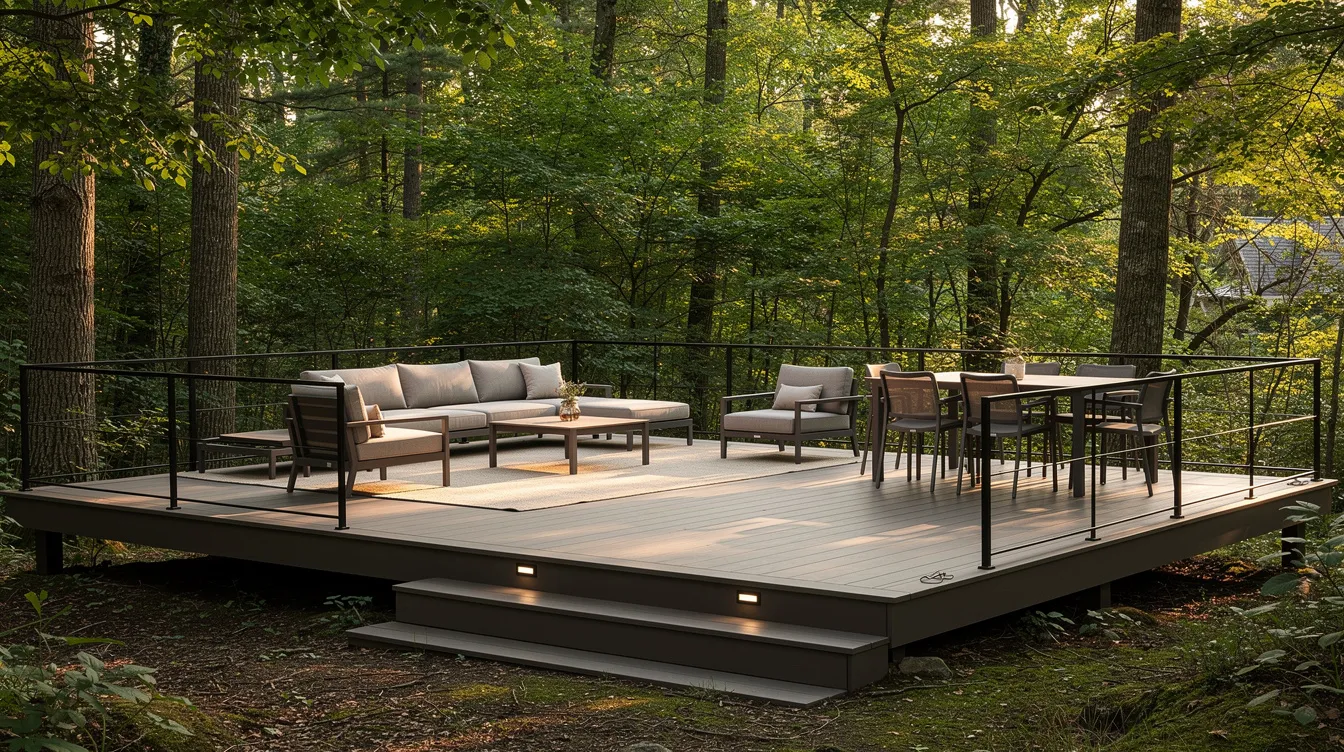
Garden State Home Remodeling, a family-owned contractor based in Sparta Township, specializes in designing and installing these low maintenance decks throughout Sussex County. Whether you're replacing an old deck or building from scratch, understanding what synthetic lumber offers-and where each type excels-will help you make a confident investment.
What Counts as "Synthetic Lumber" for Decks?
Synthetic lumber is any engineered board product made to replace solid sawn wood on a deck surface. Here are the three primary types:
- Composite decking: Wood-plastic composites are made from a mixture of recycled wood fibers and plastic, then formed into boards with a realistic wood grain texture. Most current-generation boards are "capped" with a protective shell for stain and fade resistance.
- PVC decking: Capped PVC decking contains no wood fibers and is resistant to moisture, mold, and mildew. It's lighter weight, fully synthetic, and ideal for wet environments like pool surrounds or lakefront homes.
- Mineral based composite: These boards replace traditional wood fibers with stable minerals like calcium carbonate or stone particles, delivering high strength, virtually no thermal expansion, and excellent dimensional stability in freeze-thaw climates.
All three are considered synthetic lumber because they're engineered products-not solid sawn wood-and are typically installed on pressure treated or steel framing by professionals like Garden State Home Remodeling.
Composite Deck Boards: Construction, Types, and Brands
Composite deck boards first appeared in the late 1980s and 1990s as an eco friendly alternative to pressure treated lumber. Early products had issues with fading and mold, but after about 2010, capped composite technologies transformed the category. Modern synthetic decking options mimic the natural look of wood and are fade-resistant, making them the dominant choice for new construction in New Jersey.
How they're made: Manufacturers extrude a blend of recycled wood fibers and recycled plastic, then emboss a grain pattern into the surface. Capped composite decking has a protective layer for durability-a polymer shell bonded on all exposed sides that guards against stain, scratch resistance failures, and moisture intrusion. Capped composite boards have enhanced fade and stain resistance warranties as a result.
Solid vs. hollow boards: Hollow composite boards are lighter and less expensive than solid boards, but solid boards resist bending better under load-important for NJ snow loads. Scalloped or hollow profiles may require closer joist spacing to prevent bounce underfoot.
Brands worth knowing: Trex composite decking is one of the most recognized names; Trex offers up to 50 years warranty against fading and staining on select lines. TimberTech offers four-sided capped protection for moisture resistance and provides 30- and 25-year limited warranties depending on the product tier. Zuri decking replicates exotic hardwoods with three-dimensional texturing for homeowners seeking a premium look. Fiberon and Deckorators round out the major manufacturers. Garden State Home Remodeling helps Sussex County customers select from several quality decking products to match style and budget-without locking you into a single brand.
PVC Decking and Mineral-Based Composite: When to Choose Each
Not all synthetic decking is "composite" in the wood-plastic sense. PVC decking and mineral based composite boards solve specific problems that standard composite materials may not.
PVC decking excels in high-moisture environments: pool decks, lakefront homes in Vernon, and shaded yards where mold and mildew thrive. Synthetic boards absorb virtually no moisture and are ideal for humid areas. The tradeoff? PVC can feel slightly more "plastic" underfoot, may get hot under direct sunlight on dark colors, and some smooth finishes can make composite decking slippery when wet if texture isn't adequate.
Mineral based composite replaces organic wood content with stone particles for enhanced durability and virtually zero thermal expansion. This matters in Sussex County, where freeze-thaw cycles punish other materials. These boards are lighter yet stronger, work well on elevated decks with longer joist spans, and some are even warrantied for ground or water contact-something most standard composite boards can't claim. Garden State Home Remodeling may suggest mineral based composite for rooftop decks, complex layouts, or homeowners prioritizing long-term structural stability.
Pros and Cons of Synthetic Lumber vs. Wood Decking
Many Sparta, Newton, and Vernon homeowners are torn between traditional wood and synthetic deck boards. Here's a realistic comparison:
Advantages of synthetic lumber:
- Low maintenance: composite decking eliminates the need for annual staining and sealing
- Synthetic decking resists rotting, splintering, cracking, and structural damage
- Synthetic decking is immune to damage from pests such as termites and carpenter ants
- Synthetic decking maintains consistent color with minimal fading over time-boards resist fading for decades
- Composite decking offers a clean, seamless look with hidden fasteners
- Synthetic decking does not splinter, making it safe for barefoot use-walk on it with bare feet without worry
- Manufacturers offer warranties of up to 50 years for composite decking
Drawbacks to consider:
- Higher initial material cost ($30–$65/sq ft installed vs. $15–$25 for pressure treated wood)
- Some composite and PVC boards get hot in direct sunlight during July and August
- Smooth-finished boards can be more slippery than rough-sawn wood when wet
- Premium lines with heat mitigating technology or deeper textures cost more
Pressure treated wood comparison: Traditional wood has a lower upfront price but demands regular maintenance-staining, sealing, board replacement-and typically lasts only 10–15 years in NJ's climate. Garden State Home Remodeling walks each homeowner through a realistic 10–20 year cost comparison showing how synthetic lumber often becomes cheaper over time.
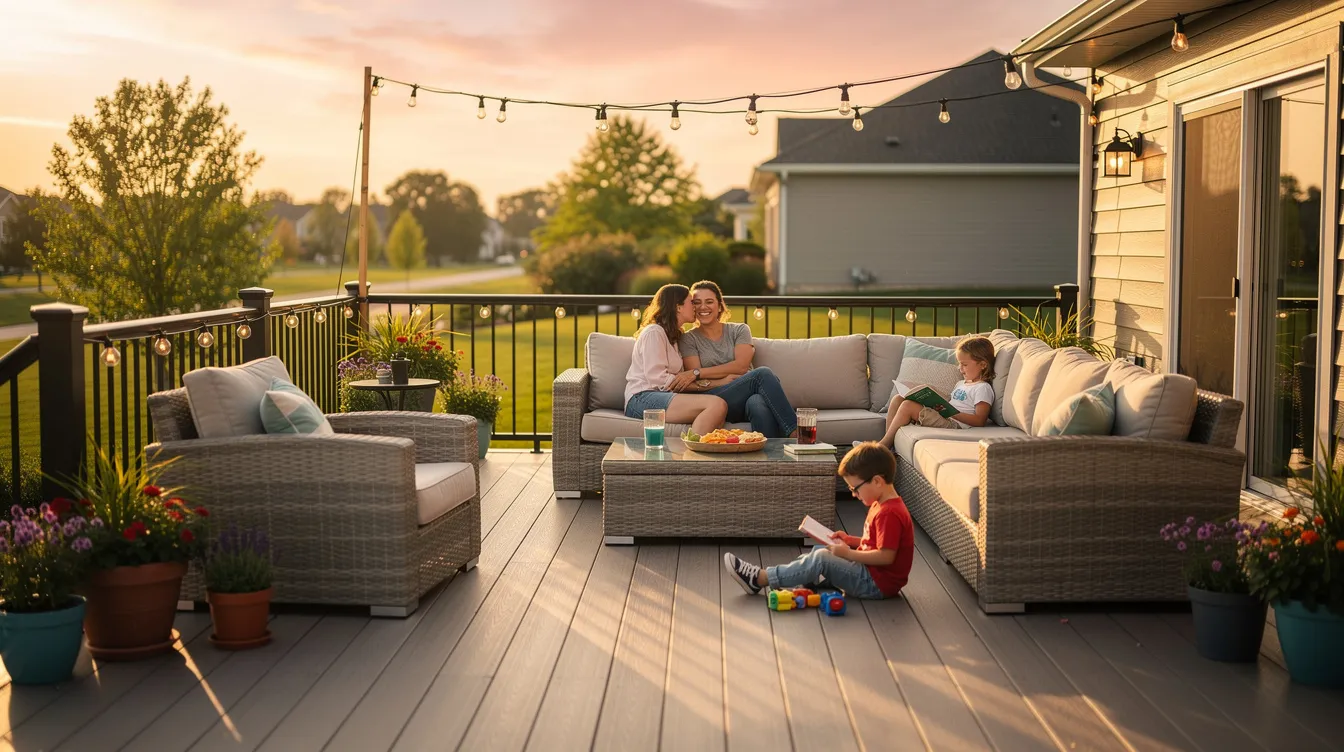
Environmental Impact and Eco-Friendly Decking Choices
Interest in environmentally friendly home improvements is growing in Sussex County, especially among families looking to reduce waste and avoid tropical hardwoods. Composite decking can be made from up to 95% recycled materials, including recycled plastic film and reclaimed wood fibers. TimberTech composite decking uses up to 85% recycled materials across its product lines.
Composite decking also reduces the need for harsh chemical sealers and stains, eliminating repeated applications of toxic preservatives over the deck's life. Fewer replacements mean less construction waste heading to landfills.
There are honest tradeoffs, though: wood-alternative products may not biodegrade in landfills, and PVC manufacturing carries its own environmental impact. A few manufacturers now offer take-back or recycling programs. Garden State Home Remodeling can help homeowners select decking products with strong sustainability credentials, including high recycled content and third-party environmental certifications when available.
Deck Safety and Performance: Is Composite Decking Slippery or Hot?
Two of the most common concerns Garden State Home Remodeling hears: "Is composite decking slippery?" and "Will it get too hot in summer?"
Slip resistance depends on surface texture, direction of grain embossing, and whether mildew, pollen, or algae has built up. A smooth capped board in a shaded, damp area will be more slippery than a deeply textured one. Composite decking with deeper embossed realistic wood grain or anti-slip finishes offers better traction. Garden State Home Remodeling typically specifies boards with textured surfaces for stairs and high-traffic areas to keep your outdoor space safe.
Heat buildup is real. Darker composite and PVC boards absorb more energy from direct sunlight. Lighter colors and mineral based composite boards generally stay cooler. Design choices like pergolas, awnings, or strategic tree cover also help. Choosing a board with heat mitigating technology can make a noticeable difference on a hot August afternoon.
Other safety factors include proper framing, secure aluminum or composite railing systems, and code-compliant stair design. As a licensed NJ contractor (#13VH08637600), Garden State Home Remodeling ensures every installation meets or exceeds local building codes.
How to Install Composite Decking the Right Way (and Why Pros Matter)
While some Sussex County homeowners attempt DIY installation, warranties may be voided by improper installation of composite decking. Long-term performance depends on getting the details right.
Key steps to install composite decking properly:
- Frame with correct joist spacing (12" or 16" on center depending on board type and span)
- Ensure proper slope for drainage-water pooling damages framing
- Use manufacturer-recommended hidden fasteners or clip systems for a seamless surface
- Allow thermal expansion gaps at board ends and between boards, especially on long runs in full sun
- Verify that framing uses durable pressure treated lumber or steel rated for the load
Different decking materials have unique requirements. Composite deck boards, PVC decking, and mineral based composite each call for specific clip types, screw spacing, and end-gap allowances.
Common DIY mistakes Garden State Home Remodeling encounters on replacement projects include joists spaced too far apart (causing bounce), no expansion gaps (leading to buckling), and using incompatible fasteners that void limited warranties. As your NJ deck and porch contractor, Garden State Home Remodeling handles permitting, inspection, and installation across Sparta, Newton, Vernon, and surrounding areas-with up to 100% financing available for qualified homeowners.
How to Maintain Composite Decking and Other Synthetic Lumber Decks
Synthetic decking is low maintenance and does not require staining or sealing-but it's not zero maintenance. Here's what to expect:
Routine cleaning to maintain composite decking:
- Sweep leaves, pine needles, and debris regularly to prevent moisture traps
- Rinse with a garden hose monthly during pollen season
- Wash 1–3 times per year with soap and water and a soft-bristle brush to remove dirt, mold, and mildew
Cleaning composite decking requires only soap and water in most cases. High-quality synthetic decking can eliminate the need for annual maintenance tasks like staining, painting, or sealing that traditional wood demands. Never apply paint or stain to capped composite or PVC boards unless the manufacturer specifically allows it, and avoid using a pressure washer nozzle closer than 8 inches from the surface.
Winter care in Sussex County: Remove snow with a plastic shovel-never metal blades. Use only manufacturer-approved ice melt. These steps protect the board surface and keep your deck performing through years of freeze-thaw cycles. Garden State Home Remodeling provides product-specific maintenance instructions at project completion so you know exactly how to care for your specific decking.

Cost, Value, and Planning a Synthetic Lumber Deck in Sussex County, NJ
Total deck cost depends on more than just board material. Size, height, railing, stairs, lighting, and design complexity all factor in. Here's a high-level breakdown for the NJ market:
| Material | Installed Cost (per sq ft) | Typical Warranty | Lifespan |
|---|---|---|---|
| Pressure treated wood | $15–$25 | 1–5 years | 10–15 years |
| Mid-range composite (Trex decking, Fiberon) | $30–$55 | 25–50 years | 25–50 years |
| Premium PVC / mineral based composite | $40–$65 | 25–50 years | 30–50+ years |
Synthetic lumber can last from 25 to 50 years with proper care, and composite decking warranties typically range from 25 to 50 years. Over 20 years, a 320 sq ft composite deck in NJ often costs less than a comparable wood deck once you factor in staining, sealing, repair, and board replacement.
Design customization-color choices, multi-width boards, picture-frame borders, integrated lighting-adds value to your outdoor living space without adding maintenance burden. Garden State Home Remodeling offers free estimates and up to 100% financing for qualified homeowners, making it easier to upgrade to a durable, stain resistant, low maintenance deck.
Ready for a Low-Maintenance Deck? Partner with Garden State Home Remodeling
If you're tired of spending weekends sanding, staining, and replacing rotted boards, it's time to explore what synthetic lumber can do for your home. Garden State Home Remodeling brings years of experience with composite decking, PVC decking, and mineral based composite systems to every project in Sussex County.
As a licensed and insured family-owned contractor based in Sparta Township, we guide homeowners in Newton, Vernon, Sparta, and neighboring towns through every step-from material selection and on-site consultation to permitting, construction, and post-project care. We also coordinate related exterior upgrades like roofing, vinyl siding, replacement windows, and masonry patios for a cohesive renovation.
Get a free estimate today and let us handle design, permitting, and installation-so you can simply enjoy your outdoor space.
Frequently Asked Questions: Synthetic Lumber and Composite Decks in New Jersey
These questions reflect what Sussex County homeowners most often ask Garden State Home Remodeling about composite decking and synthetic lumber.
How long will a synthetic lumber deck last in New Jersey's climate?
Most modern composite decking and PVC decking carries residential warranties of 25–50 years. With proper installation and basic cleaning, decks in Sussex County often outlast comparable wood decks by a decade or more. Keep in mind that the structural framing-usually pressure treated lumber-may have a different lifespan than the deck boards themselves. Garden State Home Remodeling inspects both when planning replacements or resurfacing projects.
Can Garden State Home Remodeling resurface my existing wood deck with composite decking?
In many cases, yes. We can remove old wood decking boards and install composite deck boards on the existing frame if it meets current code and passes structural inspection. If framing is undersized, rotted, or out of code, we'll recommend targeted repairs or full replacement to ensure safety and protect the new decking warranty.
Is synthetic decking a good choice around pools and hot tubs?
PVC decking and certain capped composite or mineral based composite products are excellent around pools and hot tubs due to their water resistance. However, texture and slip rating are critical for safety near water. Garden State Home Remodeling helps homeowners choose decking products specifically rated for wet environments and designs layouts with adequate drainage and grip.
Do synthetic decks look "fake" compared to real wood?
Early-generation composite decking did look more artificial, but current products offer realistic wood grain patterns, natural color variation, and wire-brushed textures that closely mimic natural hardwoods. During a consultation, Garden State Home Remodeling can show physical samples and photos of completed decks in Sparta, Newton, and Vernon so you can judge how convincing modern composite materials really are.
Can I combine synthetic decking with other outdoor projects you offer?
Absolutely. Many Sussex County homeowners bundle a new composite deck with vinyl siding updates, replacement windows, masonry patios, or even kitchen and bathroom remodeling for a coordinated home improvement plan. Garden State Home Remodeling can phase these projects and provide financing options so you can modernize your property inside and out on a manageable schedule.
Search
Recent Post
September 25, 2026
Discover the realistic costs of a kitchen remodel, from budgeting to unexpected expenses. Prepare yourself and read the full article for valuable insights.
September 23, 2026
Transform your home with our expert remodelling services. Discover how to achieve stunning results that fit your vision. Read the article for insights!
September 17, 2026
Discover how to choose the best basement finishing contractors for your home upgrade. Make informed decisions and enhance your space—read the article now!